
Johann Dieter Wassmann (Jeff Wassmann), Vorwarts! (Go Forward!), 1897
Assemblage
Assemblage is an artistic form or medium usually created on a defined substrate that consists of three-dimensional elements projecting out of or from the substrate. It is similar to collage, a two-dimensional medium. It is part of the visual arts and it typically uses found objects, but is not limited to these materials. The origin of the art form dates to the cubist constructions of Pablo Picasso c. 1912–1914. The origin of the word (in its artistic sense) can be traced back to the early 1950s, when Jean Dubuffet created a series of collages of butterfly wings, which he titled assemblages d'empreintes. However, Marcel Duchamp, Pablo Picasso and others had been working with found objects for many years prior to Dubuffet. Russian artist Vladimir Tatlin created his "counter-reliefs" in the mid 1910s. In Paris, in the 1920s Alexander Calder, Jose De Creeft, Picasso and others began making fully 3-dimensional works from metal scraps, found metal objects and wire.
Artworks
-
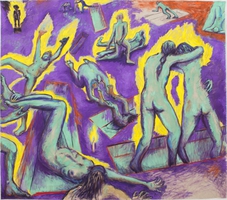 Pedro França Amanhã tem II, 2021
Martins & Montero
€10,500
Buy now
-
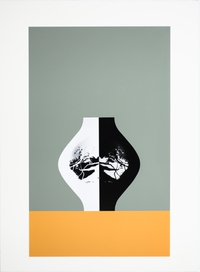 Francisco Tropa Chas, 2017
Galerie Jocelyn Wolff
€5,000
Buy now
-
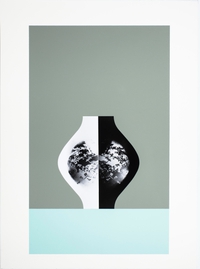 Francisco Tropa Chas, 2017
Galerie Jocelyn Wolff
€5,000
Buy now
-
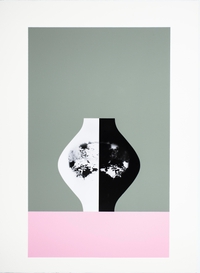 Francisco Tropa Chas, 2017
Galerie Jocelyn Wolff
€5,000
Buy now
-
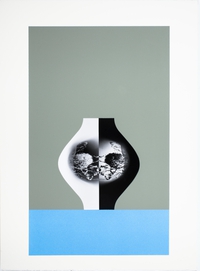 Francisco Tropa Chas, 2017
Galerie Jocelyn Wolff
€5,000
Buy now
-
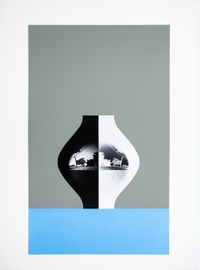 Francisco Tropa Chas, 2017
Galerie Jocelyn Wolff
€5,000
Buy now
-
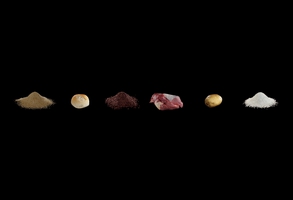 Reynier Leyva Novo Cornerstone, 2021
El Apartamento
$20,000
Buy now
-
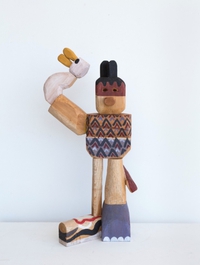 Orestes Hernández El Lobo, 2021
El Apartamento
$7,000
Buy now
-
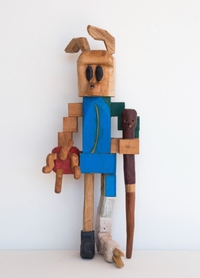 Orestes Hernández El Mago, 2021
El Apartamento
$7,000
Buy now
-
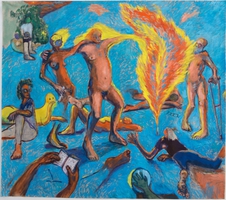 Pedro França É verdade que vimos coisas terríveis... II, 2021
Martins & Montero
€10,500
Buy now
-
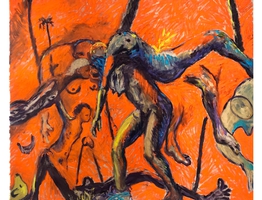 Pedro França Exercício, 2021
Martins & Montero
€5,500
Buy now
-
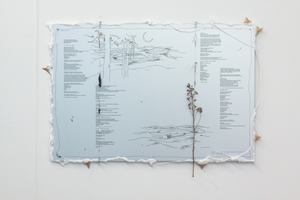 Kirill Savchenkov Fireworks and Gunpowder, 2020
Osnova Gallery
€5,000
-
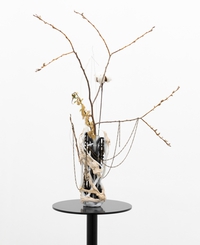 Kirill Savchenkov full down garden of purple anxiety / threat multiplier nothing is hidden from its heat / bandwidth needs of fingertips / quantum supremacy mimics bees, 2020
Osnova Gallery
€2,500
-
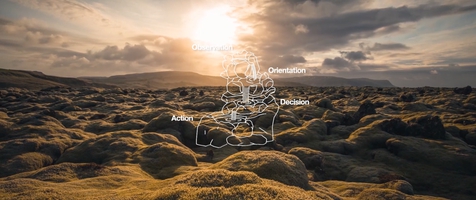 Kirill Savchenkov Knowledge Editing Division, 2017
Osnova Gallery
€5,500
-
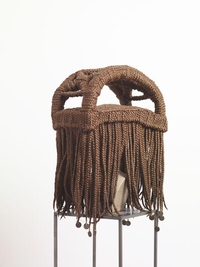 Meschac Gaba Kwame N'Krumah (perruque MAVA-musée d'art de la vie active), 2010-2011
In Situ - fabienne leclerc
€23,000
Buy now
-
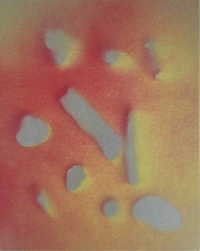 Francisco Tropa La moustache cachée dans la barbe, 2018
Galerie Jocelyn Wolff
€2,000
Buy now
-
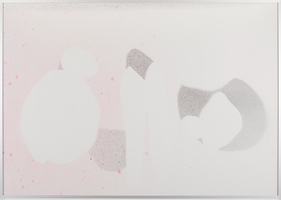 Francisco Tropa Le songe de Scipion, 2015
Galerie Jocelyn Wolff
€4,500
Buy now
-
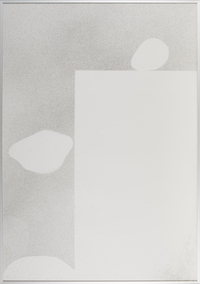 Francisco Tropa Le songe de Scipion, 2015
Galerie Jocelyn Wolff
€4,500
Buy now
-
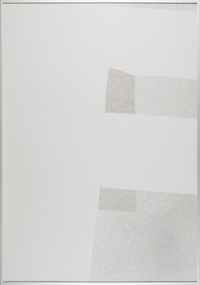 Francisco Tropa Le songe de Scipion, 2015
Galerie Jocelyn Wolff
€4,500
Buy now
-
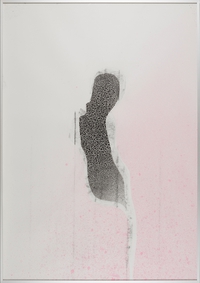 Francisco Tropa Le songe de Scipion, 2015
Galerie Jocelyn Wolff
€4,500
Buy now
-
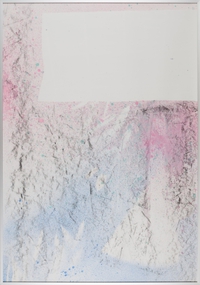 Francisco Tropa Le songe de Scipion, 2015
Galerie Jocelyn Wolff
€4,500
Buy now
-
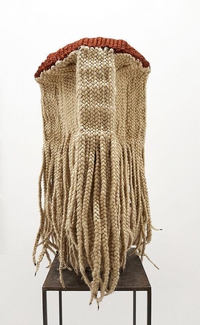 Meschac Gaba Louvre Abu Dhabi, 2019
In Situ - fabienne leclerc
€25,000
Buy now
-
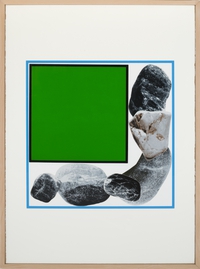 Francisco Tropa Panta Rhei, 2016
Galerie Jocelyn Wolff
€5,000
Buy now
-
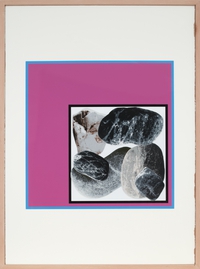 Francisco Tropa Panta Rhei, 2016
Galerie Jocelyn Wolff
€5,000
Buy now
-
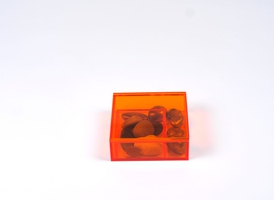 Francisco Tropa Panta Rhei, 2015
Galerie Jocelyn Wolff
€3,300
Buy now
-
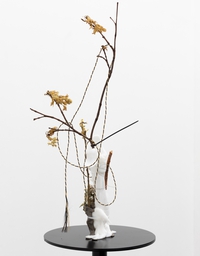 Kirill Savchenkov say you remember me a loophole in the zones of active hostilities / I would have little luck / the realm of maybe enemy / If I stayed timeless time, 2020
Osnova Gallery
€2,500
-
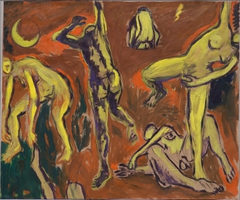 Pedro França Study for “Fogo, merda, água e lama”, 2021
Martins & Montero
€3,000
Buy now
-
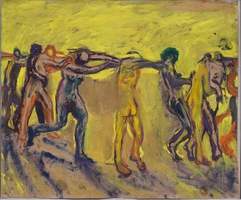 Pedro França Study for “nenhum, nenhum, cem mil”, 2021
Martins & Montero
€3,000
Buy now
-
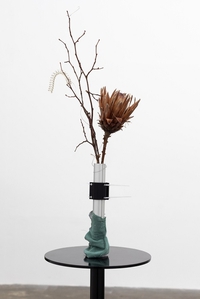 Kirill Savchenkov the effect of a moonshine / the limits of sensor automation / proximity is dangerous yet information-rich / but I’m sitting inside there, 2020
Osnova Gallery
€2,500
-
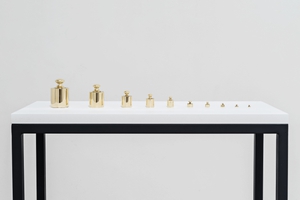 Reynier Leyva Novo The Weight of Dead, 2016
El Apartamento
$24,000
Buy now
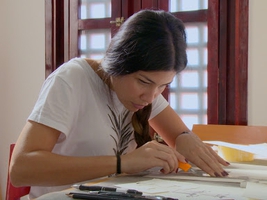 Ariamna Contino
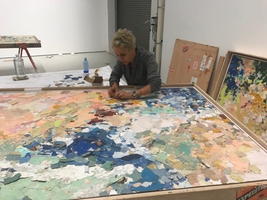 Diana Fonseca
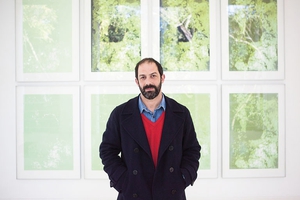 Francisco Tropa
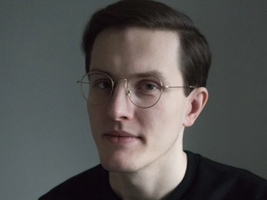 Kirill Savchenkov
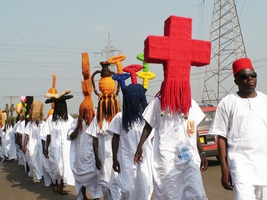 Meschac Gaba
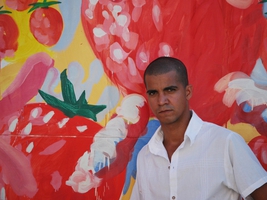 Orestes Hernández
 Pedro França
 Reynier Leyva Novo