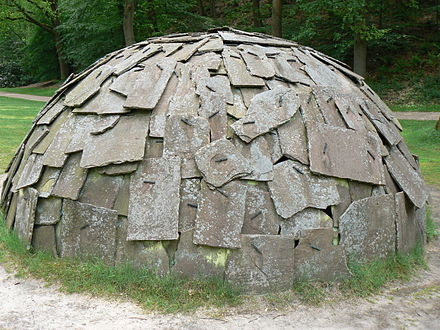
Gerardus, Public Domain
Arte Povera
Arte Povera (pronounced [ˈarte ˈpɔːvera]; literally poor art) was an art movement that took place between the end of the 1960s and the beginning of the 1970s in major cities throughout Italy and above all in Turin. Other cities where the movement was also important are Milan, Rome, Genoa, Venice, Naples and Bologna. The term was coined by Italian art critic Germano Celant in 1967 and introduced in Italy during the period of upheaval at the end of the 1960s, when artists were taking a radical stance. Artists began attacking the values of established institutions of government, industry, and culture.
Some of the first exhibitions of artists associated with Arte Povera were held at the Christian Stein Gallery in Turn, run by Margherita Stein. The exhibition "Im Spazio" (The Space of Thoughts), curated by Celant and held at the Galleria La Bertesca in Genoa, Italy, from September through October 1967, is often considered to be the official starting point of Arte Povera. Celant, who became one of Arte Povera's major proponents, organized two exhibitions in 1967 and 1968, followed by an influential book published by Electa in 1985 called Arte Povera Storie e protagonisti/Arte Povera. Histories and Protagonists, promoting the notion of a revolutionary art, free of convention, the power of structure, and the market place.
Artworks
-
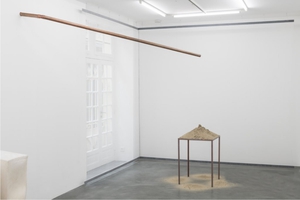 Katinka Bock April table, 2019
Galerie Jocelyn Wolff
€26,500
Sold
-
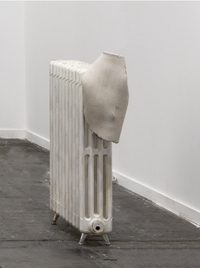 Katinka Bock Cameleon (HM), 2019
Galerie Jocelyn Wolff
€15,500
Buy now
-
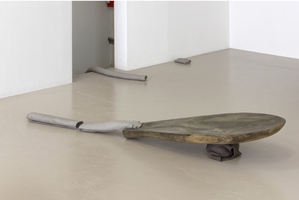 Katinka Bock Cuillère, couchée, 2018
Galerie Jocelyn Wolff
€30,000
Sold
-
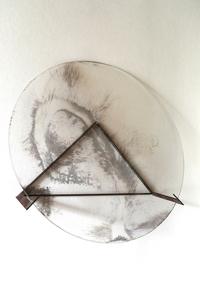 Alexandra Sukhareva Five pronunciation exercises. Glass #1, 2020
Osnova Gallery
€7,000
-
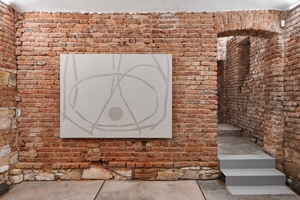 Alexandra Sukhareva Lake, 2021
Osnova Gallery
€18,000
-
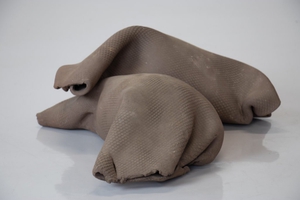 Katinka Bock Tatou (duo), 2020
Galerie Jocelyn Wolff
€13,000
Buy now
-
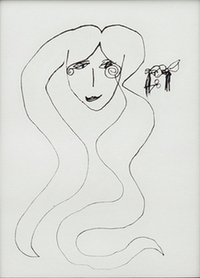 Alexandra Sukhareva Untitled (etching according to the drawing of 1987), 2019
Osnova Gallery
€1,400
-
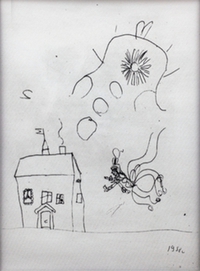 Alexandra Sukhareva Untitled (Etching according to the drawing of 1988), 2019
Osnova Gallery
€1,400
 Alexandra Sukhareva
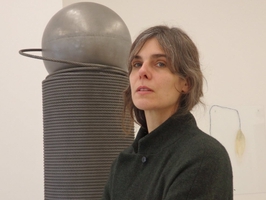 Katinka Bock