Courtesy of the artist & In Situ - fabienne leclerc
Courtesy of the artist & In Situ - fabienne leclerc
Courtesy of the artist & In Situ - fabienne leclerc
Courtesy of the artist & In Situ - fabienne leclerc
Courtesy of the artist & In Situ - fabienne leclerc
Courtesy of the artist & In Situ - fabienne leclerc
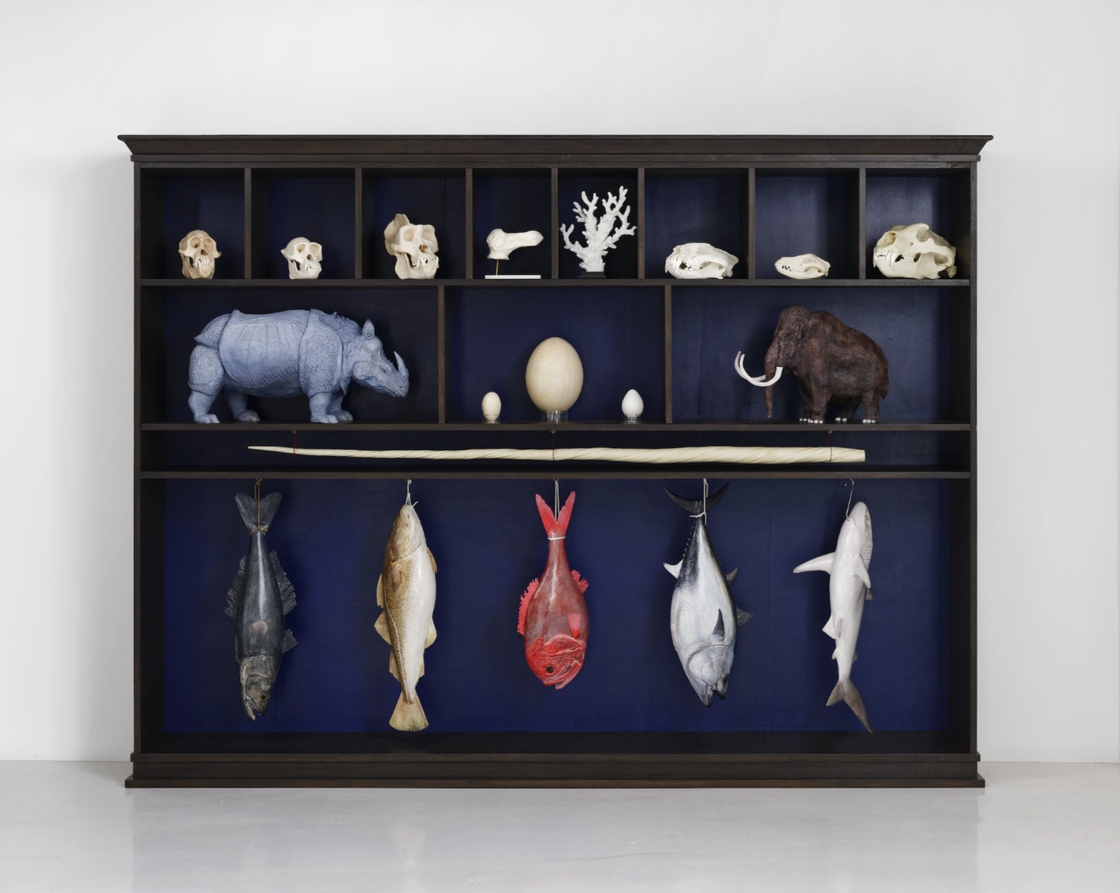
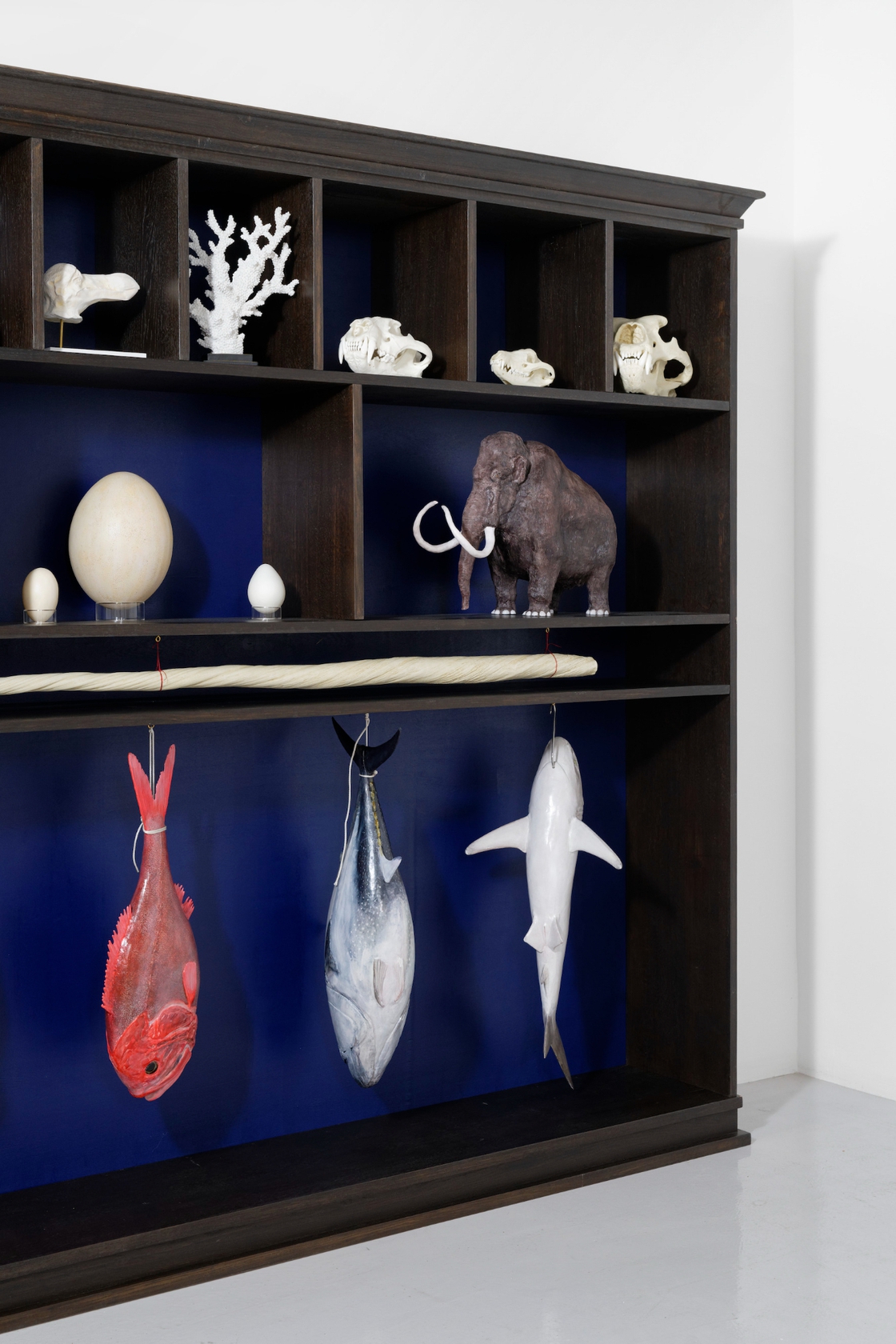
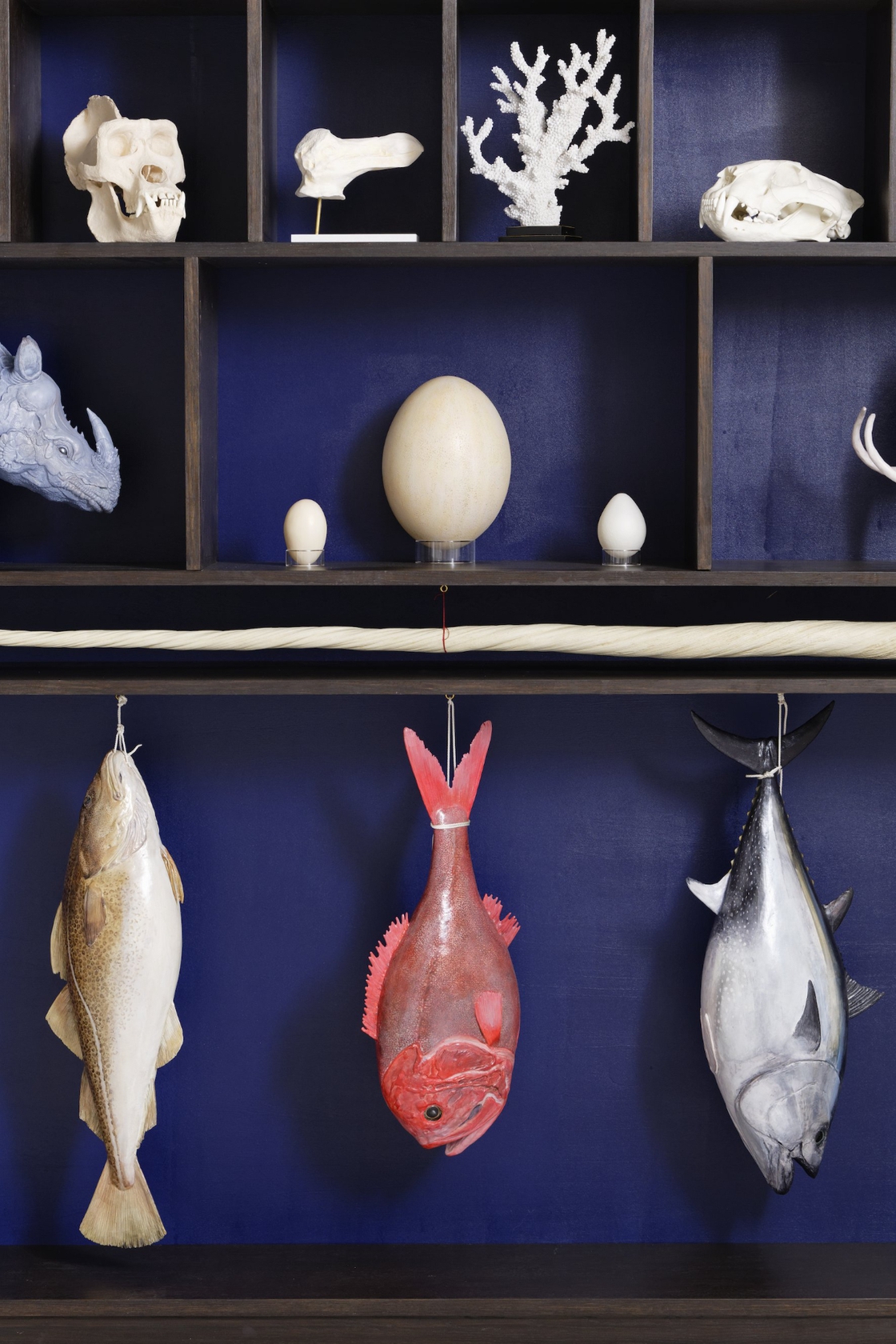
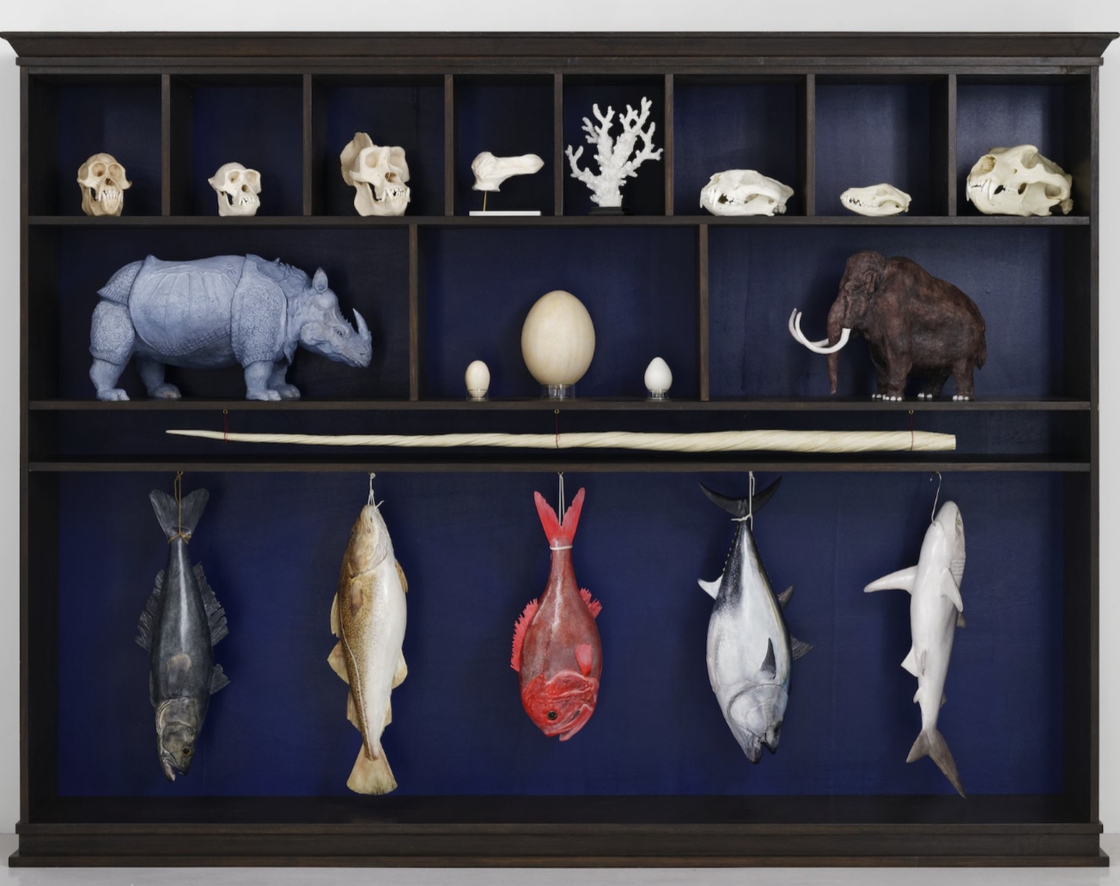
The Extinction Cabinet, 2021
Various sculptures in resin and plaster, wood cabinet
44 × 236 × 310 cm | 17 5/16 × 92 15/16 × 122 1/16 in.
Certificate provided by the gallery
Romainville
€130,000
Buy now Contact us
The artwork pledge
Tags
- Amazon Rainforest
- Animals
- Anthropocene
- Anthropomorphism
- Archaeology
- Biodiversity
- Biotechnology
- Cabinet of Curiosities
- Climate Change
- Consumerism
- Drawing
- Dystopia
- Endangered Species
- Ernst Haeckel
- Extinction
- Figurative
- France
- Global Warming
- Industrial Revolution
- Installation
- Land Art
- Landscape
- Massachusetts
- Mixed Media
- Natural History
- Nature
- New York City
- North America
- Nostalgia
- Paris
- Pencil on Paper
- Poaching
- Pollution
- Robert Smithson
- Sculpture 3D
- Social
- Spiral Jetty
- United States
- Wildfire
- Wood
- Works on Paper
- Zoonosis
About this artwork
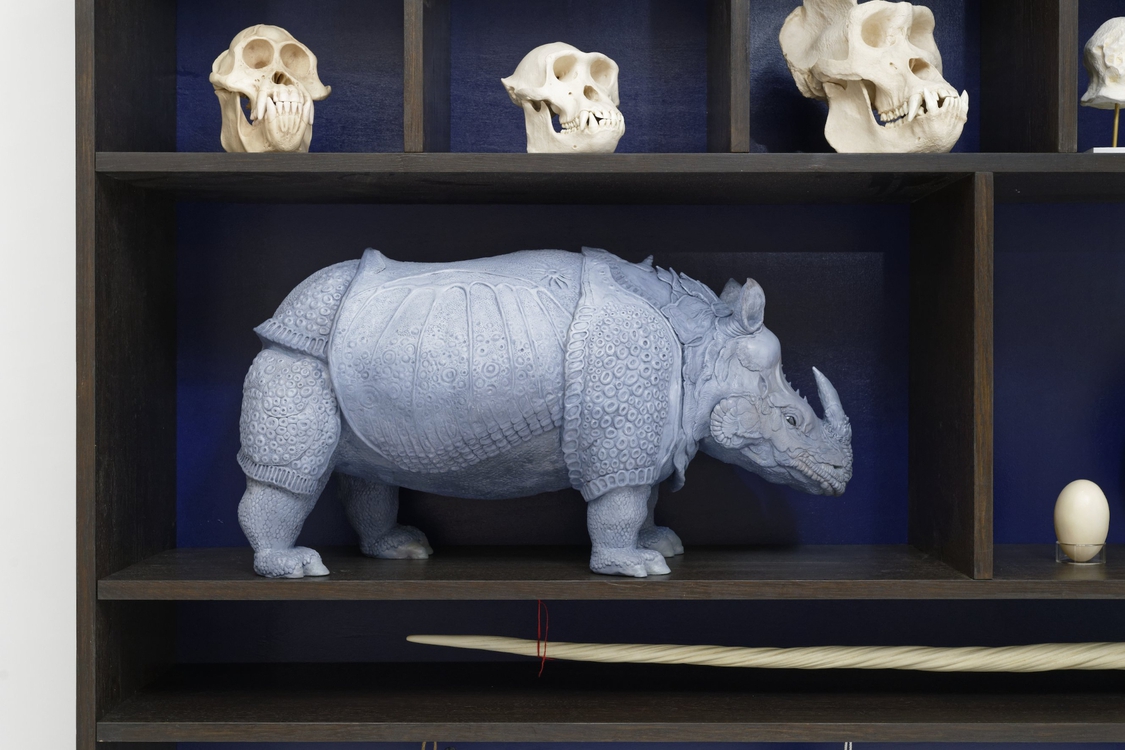
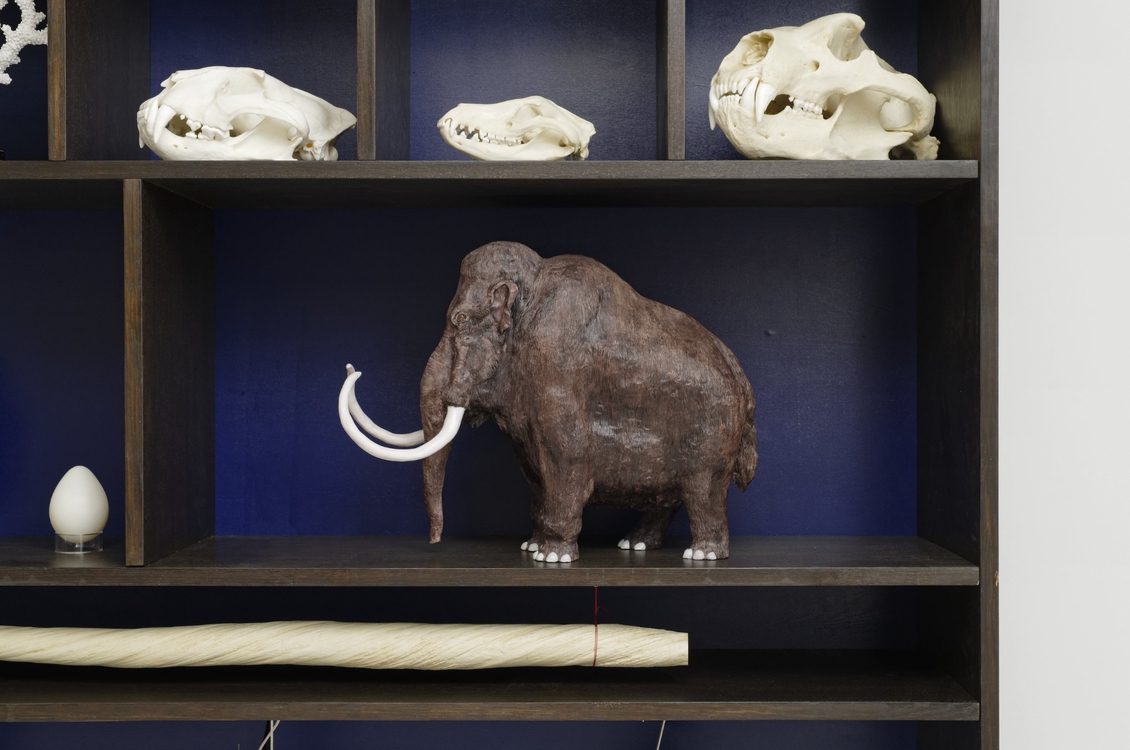
Taking on the appearance of clarity, Extinction Cabinet seems paradigmatic to me of this complexity. This somber display case with its very precise spatial organization is thought of as an open discursive structure. Although in the form of replies, the visible skulls on the upper shelf bring to mind the natural history museum. The central part resembles a living room "bookcase" in which a rhinoceros and a mammoth are symmetrically placed around three eggs, like bibelots. While the narwhal tooth seems to be an object of curiosity, the fish appear both more familiar and hardly in their place. Dion mixes temporalities, scales and categories, but each animal artifact refers to actions having inexorably led or leading to the disappearance of their species. A facsimile of the sole existing vestige of the sadly emblematic dodo is placed next to a piece of whitened coral, a way of creating a bridge between the 17th century and a near future. A Tasmanian wolf's skull - the animal was officially declared extinct in 1936 - is framed by those of a Siberian tiger and a polar bear. They are the counterpart of those of three anthropoidal primates, our closest relatives: an orang outang, a chimpanzee and a gorilla, similarly threatened with rapid extinction. The cod, bluefin tuna, shark and other deep-water fish are themselves victims of today's overfishing, justifying their being included in this macabre ensemble on the shelf.
The very reality of certain animals once seen as extraordinary beings was put in doubt before tangible evidence was discovered, subfossils (relatively recent remains) or living individuals. The erroneous or imaginary representations created by this lack of knowledge have endured. Consequently, recognizable by the small horn on the backbone, the figurine of the rhinoceros was made based on Dürer's celebrated engraving, itself depicted after a description. The narwhal tooth was long thought to be a unicorn horn. Whereas the century of the Enlightenment saw the shift from curiosity to scholarly study, the 19th century was that of systematic exploration and colonization, which triggered the massive destruction of nature. Like a condensate, Extinction Cabinet traces a history of extermination, whether caused by the wonder provoked before this strange natural beauty, by negligence, the desire to know, or by the overexploitation of riches thought to be inexhaustible.
Extract text Tableau noir (Blackboard) by Natacha Pugnet (July 2021)
More artworks by Mark Dion
-
 Mark Dion Arbor Vitae, 2020
In Situ - fabienne leclerc
€4,000
Sold
-
 Mark Dion Bison of St. Louis, 2010
In Situ - fabienne leclerc
€4,000
Buy now
-
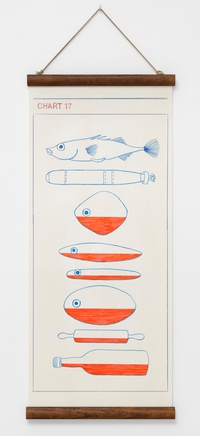 Mark Dion Chart 17, 2020
In Situ - fabienne leclerc
€6,500
Sold
-
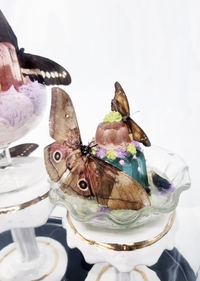 Mark Dion Confectionary Curiosity, 2024
In Situ - fabienne leclerc
€25,000
Buy now