Neo-Concrete Movement
The Neo-Concrete Movement (1959–61) was a Brazilian art movement, a group that splintered off from the larger Concrete Art movement prevalent in Latin America and in other parts of the world. The Neo-Concretes emerged from Rio de Janeiro’s Grupo Frente. They rejected the pure rationalist approach of concrete art and embraced a more phenomenological and less scientific art. Ferreira Gullar inspired Neo-Concrete philosophy through his essay “Theory of the Non-Object” (1959) and wrote the “Neo-Concrete Manifesto” (1959) which outlines what Neo-Concrete art should be. Lygia Clark, Hélio Oiticica, and Lygia Pape were among the primary leaders of this movement.
Brazilian poet and writer Ferreira Gullar wrote the Neo-Concrete Manifesto in 1959 and described a work of art as “something which amounts to more than the sum of its constituent elements; something which analysis may break down into various elements but which can only be understood phenomenologically.” Neo-concrete art must disassemble the limitations of the object and “express complex human realities.
Artworks
-
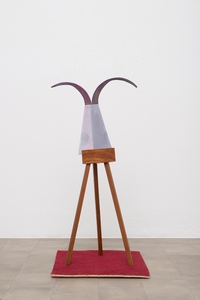 Ana Mazzei Bode (Goat), 2019
Martins & Montero
€4,000
Buy now
-
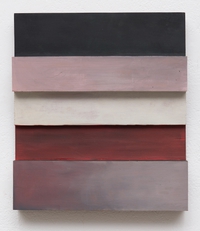 Ana Mazzei Cenário Bandeira, 2021
Martins & Montero
€7,500
Buy now
-
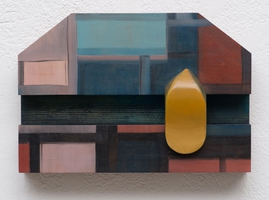 Ana Mazzei Cenário Xadrez, 2021
Martins & Montero
€7,500
Buy now
-
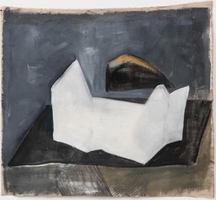 Ana Mazzei Estudos para Fantasmas / Lençol, 2017
Martins & Montero
€3,500
Buy now
-
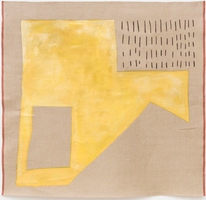 Ana Mazzei Estudos para Fantasmas / Pato, 2017
Martins & Montero
€7,500
Buy now
-
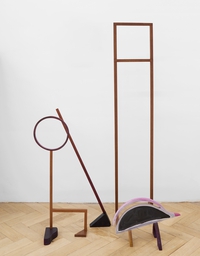 Ana Mazzei Picadeiro I, 2021
Martins & Montero
€12,000
Buy now
-
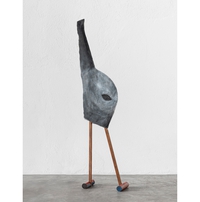 Ana Mazzei Rabbit, 2021
Martins & Montero
€7,000
Buy now
-
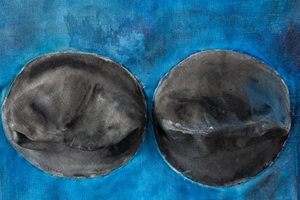 Ana Mazzei Shirt, 2021
Martins & Montero
€7,000
Buy now
 Ana Mazzei