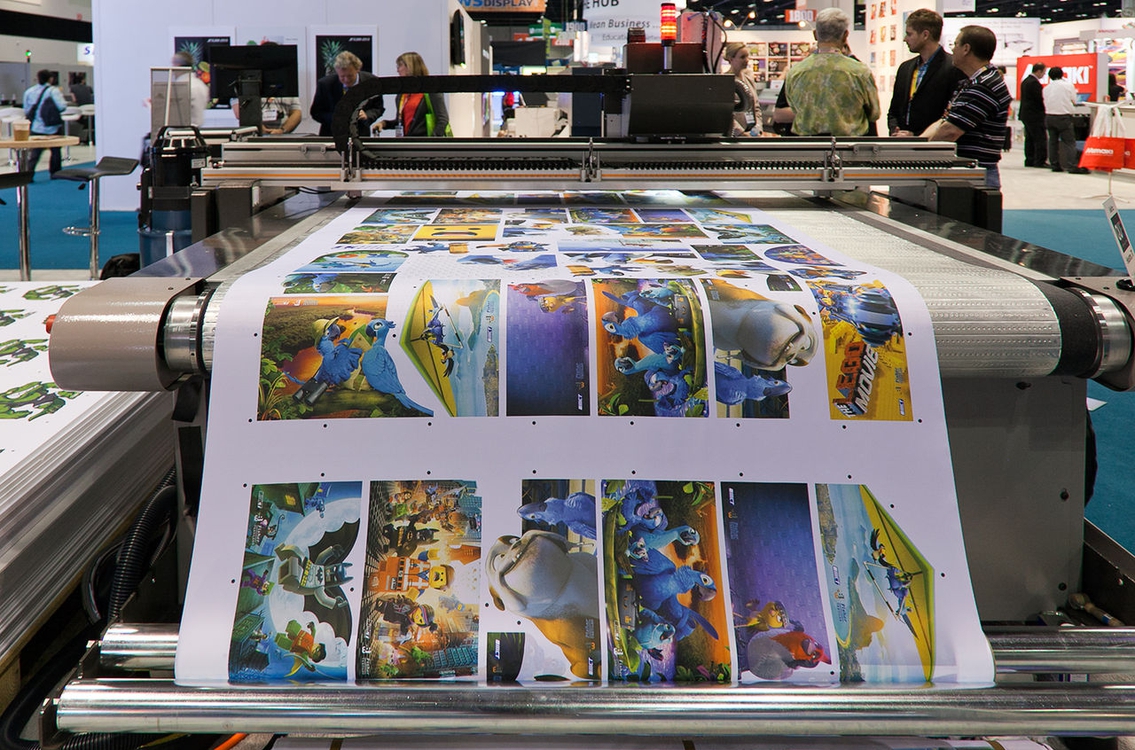
Caroline Culler, CC BY-SA 4.0
Digital Print
Digital printing is a method of printing from a digital-based image directly to a variety of media. It usually refers to professional printing where small-run jobs from desktop publishing and other digital sources are printed using large-format and/or high-volume laser or inkjet printers. Digital printing has a higher cost per page than more traditional offset printing methods, but this price is usually offset by avoiding the cost of all the technical steps required to make printing plates. It also allows for on-demand printing, short turnaround time, and even a modification of the image (variable data) used for each impression. The savings in labor and the ever-increasing capability of digital presses means that digital printing is reaching the point where it can match or supersede offset printing technology's ability to produce larger print runs of several thousand sheets at a low price. The greatest difference between digital printing and analog methods, such as lithography, flexography, gravure, and letterpress, is that in digital printing (introduced in the 1980s) there is no need to replace printing plate, whereas in analog printing the plates are repeatedly replaced.
Artworks
-
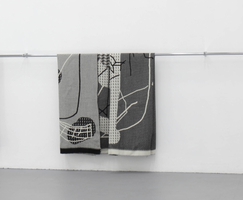 Jessica Andrey Bogush Black carpet, 2017
Osnova Gallery
€4,500
-
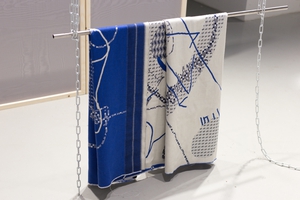 Jessica Andrey Bogush Blue carpet, 2017
Osnova Gallery
€4,500
-
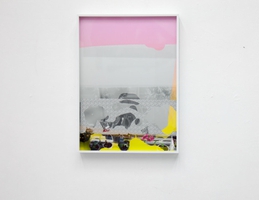 Jessica Andrey Bogush Proposal for blue mat and photograph, 2017
Osnova Gallery
€1,200
-
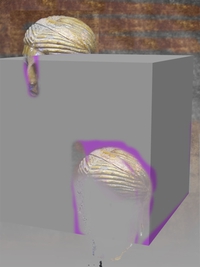 Jessica Andrey Bogush Proposal for duplicated head, purple and grey default cube (ver.2), 2016
Osnova Gallery
€3,000
 Jessica Andrey Bogush