Collectivism is a value that is characterized by an emphasis on cohesiveness among individuals and prioritization of the group over the self. Individuals or groups that subscribe to a collectivist worldview tend to find common values and goals as particularly salient and demonstrate greater orientation toward in-group than toward out-group. The term "in-group" is thought to be more diffusely defined for collectivist individuals to include societal units ranging from the nuclear family to a religious or racial/ethnic group.
Max Weber (1930) contrasted collectivism and individualism through the lens of religion, believing that Protestants were more individualistic and self-reliant compared to Catholics, who endorsed hierarchical, interdependent relationships among people. Geert Hofstede (1980) was highly influential in ushering in an era of cross-cultural research making comparisons along the dimension of collectivism versus individualism. Hofstede conceptualized collectivism and individualism as part of a single continuum, with each cultural construct representing an opposite pole. The author characterized individuals that endorsed a high degree of collectivism as being embedded in their social contexts and prioritizing communal goals over individual goals.
 Jonas Staal Anatomy of a Revolution: Azawad, 2014
Laveronica
€4,000
Buy now
 Jonas Staal Anatomy of a Revolution: Rojava, 2015
Laveronica
€4,000
Buy now
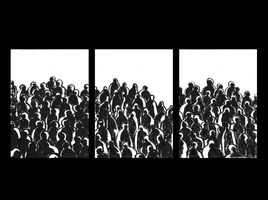 Jonas Staal Assemblism, Study, 2018-19
Laveronica
€6,000
Buy now
 Mario Pfeifer #blacktivist, 2015
KOW
€19,040
Buy now
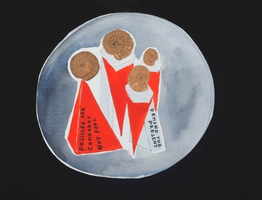 Jonas Staal Interplanetary Species Society, Studies, 2019
Laveronica
€4,000
Buy now
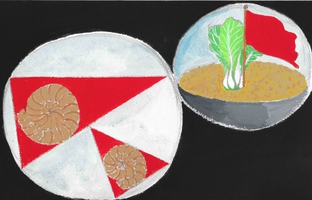 Jonas Staal Interplanetary Species Society, Studies, 2019
Laveronica
€3,000
Buy now
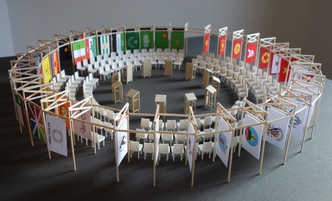 Jonas Staal New World Summit - Berlin (architectural model), 2012
Laveronica
€24,000
Buy now
 Nicholas Mangan Termite Economies Phase 3, 2020
LABOR
$15,000
 Nicholas Mangan Termite Economies Phase 3 (Root Causes/Termite topology), 2019
LABOR
$22,000
 Nicholas Mangan Termite Economies Phase 3 (Rorschach), 2019
LABOR
$16,000
 Nicholas Mangan Termite Economies Phase 3 (Trophallaxis), 2019
LABOR
$25,000
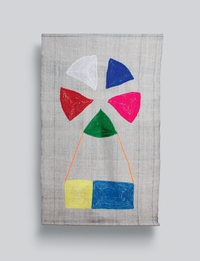 Mario Pfeifer Untitled [population by age], 2014
KOW
€11,900
Buy now
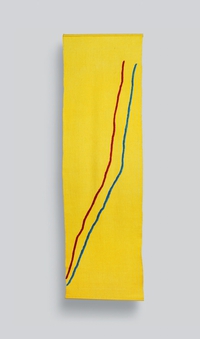 Mario Pfeifer Untitled [population by gender], 2014
KOW
€11,900
Buy now
 Mario Pfeifer Untitled (Two Guys), 2008
KOW
€14,280
Buy now
 Anna Hulačová
 Jonas Staal
 Mario Pfeifer