
Alexander C. Wimmer. CC BY-SA 3.0 at
Chlorine
Chlorine is a chemical element with the symbol Cl and atomic number 17. The second-lightest of the halogens, it appears between fluorine and bromine in the periodic table and its properties are mostly intermediate between them. Chlorine is a yellow-green gas at room temperature. It is an extremely reactive element and a strong oxidising agent: among the elements, it has the highest electron affinity and the third-highest electronegativity on the revised Pauling scale, behind only oxygen and fluorine. On several scales other than the revised Pauling scale, nitrogen's electronegativity is also listed as greater than chlorine's, such as on the Allen, Allred-Rochow, Martynov-Batsanov, Mulliken-Jaffe, Nagle, and Noorizadeh-Shakerzadeh electronegativity scales. Chlorine played an important role in the experiments conducted by medieval alchemists, which commonly involved the heating of chloride salts like ammonium chloride (sal ammoniac) and sodium chloride (common salt), producing various chemical substances containing chlorine such as hydrogen chloride, mercury(II) chloride (corrosive sublimate), and hydrochloric acid (in the form of aqua regia).
Artworks
-
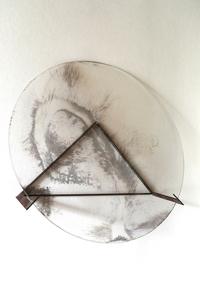 Alexandra Sukhareva Five pronunciation exercises. Glass #1, 2020
Osnova Gallery
€7,000
-
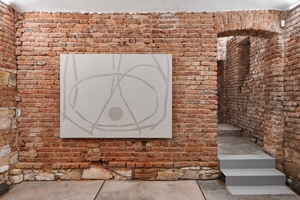 Alexandra Sukhareva Lake, 2021
Osnova Gallery
€18,000
-
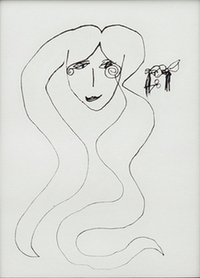 Alexandra Sukhareva Untitled (etching according to the drawing of 1987), 2019
Osnova Gallery
€1,400
-
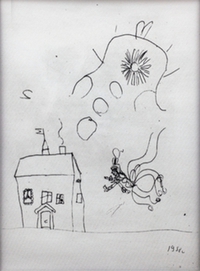 Alexandra Sukhareva Untitled (Etching according to the drawing of 1988), 2019
Osnova Gallery
€1,400
 Alexandra Sukhareva