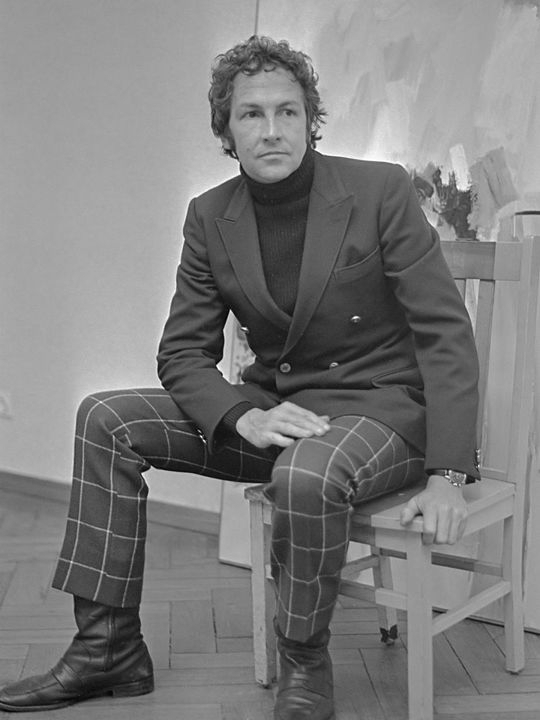
Jac. de Nijs, CC BY-SA 3.0
Robert Rauschenberg
Milton Ernest "Robert" Rauschenberg (October 22, 1925 – May 12, 2008) was an American painter and graphic artist whose early works anticipated the Pop art movement. Rauschenberg is well known for his Combines (1954–1964), a group of artworks which incorporated everyday objects as art materials and which blurred the distinctions between painting and sculpture. Rauschenberg was both a painter and a sculptor, but he also worked with photography, printmaking, papermaking and performance.
Rauschenberg received numerous awards during his nearly 60-year artistic career. Among the most prominent were the International Grand Prize in Painting at the 32nd Venice Biennale in 1964 and the National Medal of Arts in 1993. Rauschenberg's approach was sometimes called "Neo-Dadaist," a label he shared with the painter Jasper Johns. Rauschenberg famously stated that “painting relates to both art and life,” and he wanted to work "in the gap between the two.” Like many of his Dadaist predecessors, Rauschenberg questioned the distinction between art objects and everyday objects, and his use of readymade materials reprised the intellectual issues raised by Marcel Duchamp’s Fountain (1917).
Artworks
-
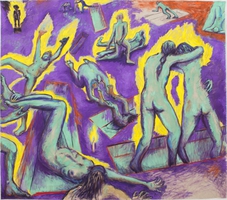 Pedro França Amanhã tem II, 2021
Martins & Montero
€10,500
Buy now
-
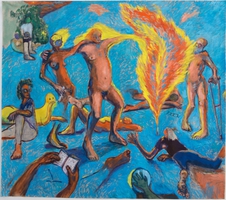 Pedro França É verdade que vimos coisas terríveis... II, 2021
Martins & Montero
€10,500
Buy now
-
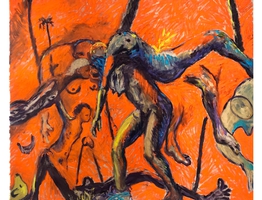 Pedro França Exercício, 2021
Martins & Montero
€5,500
Buy now
-
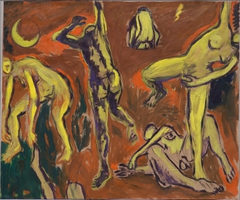 Pedro França Study for “Fogo, merda, água e lama”, 2021
Martins & Montero
€3,000
Buy now
-
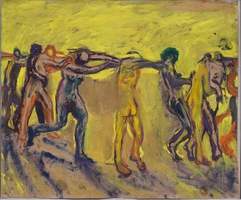 Pedro França Study for “nenhum, nenhum, cem mil”, 2021
Martins & Montero
€3,000
Buy now
-
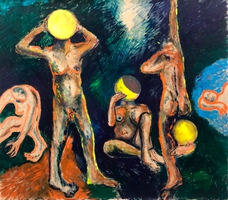 Pedro França Untitled, 2021
Martins & Montero
€5,500
Buy now
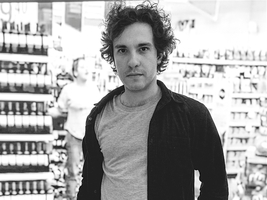 Pedro França