
The Belly and the Members
The Belly and the Members is one of Aesop's Fables and is numbered 130 in the Perry Index. It has been interpreted in varying political contexts over the centuries.
There are several versions of the fable. In early Greek sources it concerns a dispute between the stomach and the feet, or between it and the hands and feet in later Latin versions. These grumble because the stomach gets all of the food, refusing to supply them with nourishment. They see sense when they realise that they are weakening themselves. In Mediaeval versions, the rest of the body becomes so weakened that it dies, and later illustrations almost monotonously portray an enfeebled man expiring on the ground. The present understanding is that the tale's moral supports team effort and recognition of the vital part that all members play in it. In more authoritarian times, however, the fable was taken to affirm direction from the centre.
Research points to early Eastern fables dealing with similar disputes. Most notably there is a fragmentary Egyptian papyrus going back to the 2nd millennium BCE that belongs to the Near Eastern genre of debate poems; in this case the dispute is between the Belly and the Head. It is thus among the first known examples of the body politic metaphor.
Artworks
-
 Prinz Gholam Ihr Zimmer, 2004
Galerie Jocelyn Wolff
€3,500
Buy now
-
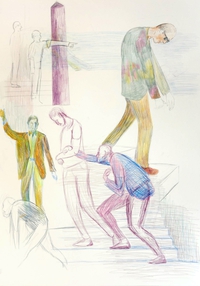 Prinz Gholam Similitude (Rakes Progress), 2018
Galerie Jocelyn Wolff
€11,000
Buy now
-
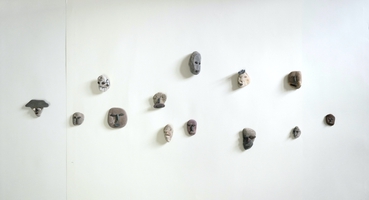 Prinz Gholam The River, 2021
Galerie Jocelyn Wolff
€13,000
Buy now
-
 Prinz Gholam The spirit of the dead watches, 2022
Galerie Jocelyn Wolff
€3,500
Buy now
 Prinz Gholam