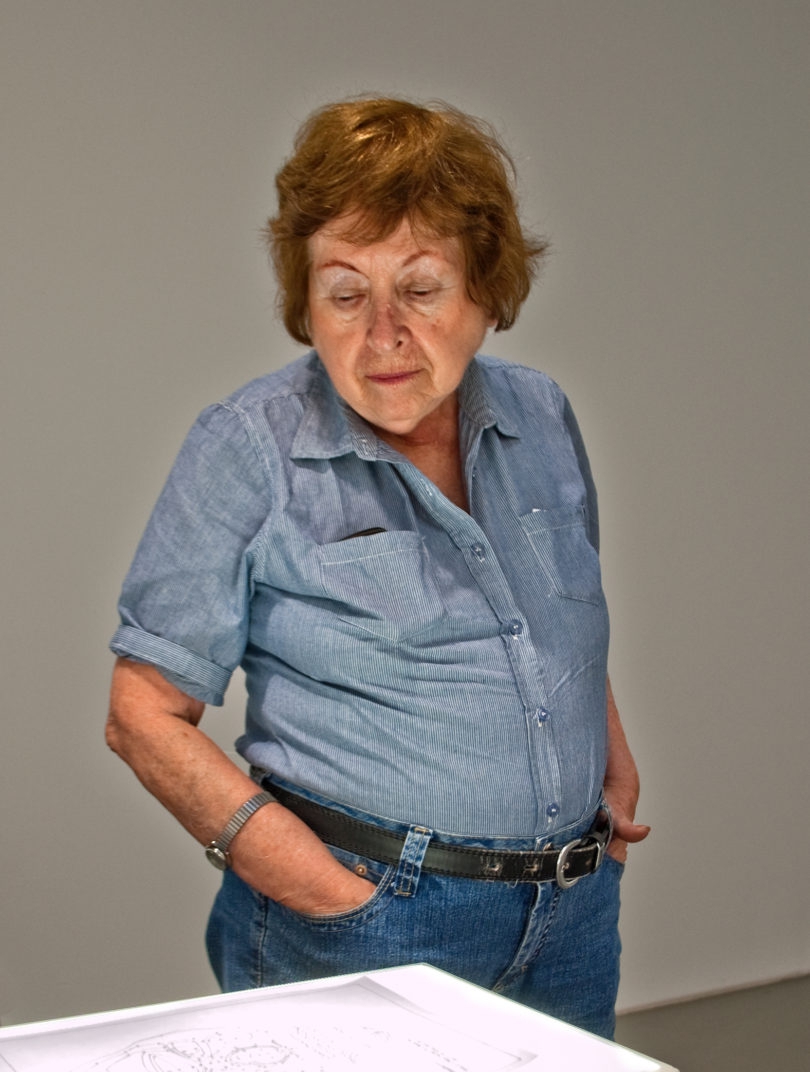
Nici Wegener, CC BY-SA 4.0
Teresa Burga
Teresa Burga (1935–2021) was a multimedia artist whose conceptual art works during the late 1960s and 1970s position her as a precursor of media art, technology-based art, and installation art in Peru. In the 1960s, Burga was a member of the group Arte Nuevo (1966–1968), along with Luis Arias Vera, Gloria Gómez-Sánchez, Jaime Dávila, Víctor Delfín, Emilio Hernández Saavedra, José Tang, Armando Varela, and Luis Zevallos Hetzel. The group is widely credited with the introduction of the new avant-garde tendencies in the Peruvian context, such as Pop art, Op art, and happenings. During this time, she exhibited in Peru and Argentina, including two solo shows of her series of prints Lima imaginada in Lima, at the gallery Cultura y Libertad in 1965, and in Buenos Aires, at the gallery Siglo XXI in 1966.[4] When Burga returned to Peru after her studies in Chicago, the country was under the military government of general Juan Velasco Alvarado. Under the populist policies of the regime, Burga's experimental proposals were deemed as not possessing enough "Peruvian character," and the artist's exhibition possibilities—severely limited. Nonetheless, she realized two ambitious, large-scale multimedia installations at the gallery of Instituto Cultural Peruano Norte-americano in Lima: Autorretrato. Estructura-Informe 9.6.72 (Self-portrait. Structure-report) in 1972, and Cuatro mensajes (Four messages), in 1974.
Artworks
-
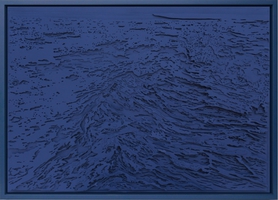 Ariamna Contino Untitled, from the series Deriva, 2021
El Apartamento
$10,000
Buy now
-
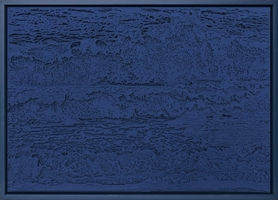 Ariamna Contino Untitled, from the series Deriva, 2021
El Apartamento
$10,000
Buy now
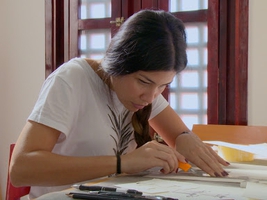 Ariamna Contino