Social sculpture
Social sculpture is a phrase used to describe an expanded concept of art that was invented by the artist and co-founder of the German Green Party, Joseph Beuys. Beuys created the term "social sculpture" to embody his understanding of art's potential to transform society. As a work of art, a social sculpture includes human activity that strives to structure and shape society or the environment. The central idea of a social sculptor is an artist who creates structures in society using language, thoughts, actions, and objects.
During the 1960s, Beuys formulated his central theoretical concepts concerning the social, cultural and political function and potential of art. Indebted to Romantic writers such as Novalis and Schiller, Beuys was motivated by a utopian belief in the power of universal human creativity and was confident in the potential for art to bring about revolutionary change. These ideas were founded in the social ideas of anthroposophy and the work of Rudolf Steiner, of which he was a vigorous and original proponent.
Artworks
-
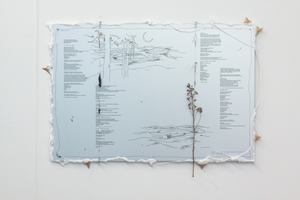 Kirill Savchenkov Fireworks and Gunpowder, 2020
Osnova Gallery
€5,000
-
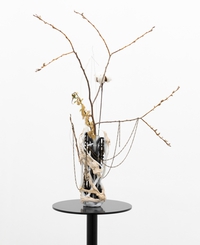 Kirill Savchenkov full down garden of purple anxiety / threat multiplier nothing is hidden from its heat / bandwidth needs of fingertips / quantum supremacy mimics bees, 2020
Osnova Gallery
€2,500
-
 Kirill Savchenkov Knowledge Editing Division, 2017
Osnova Gallery
€5,500
-
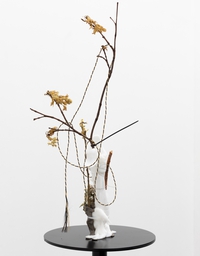 Kirill Savchenkov say you remember me a loophole in the zones of active hostilities / I would have little luck / the realm of maybe enemy / If I stayed timeless time, 2020
Osnova Gallery
€2,500
-
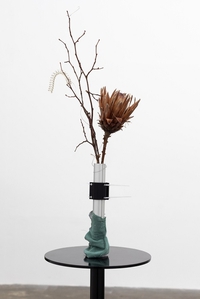 Kirill Savchenkov the effect of a moonshine / the limits of sensor automation / proximity is dangerous yet information-rich / but I’m sitting inside there, 2020
Osnova Gallery
€2,500
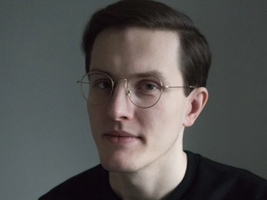 Kirill Savchenkov
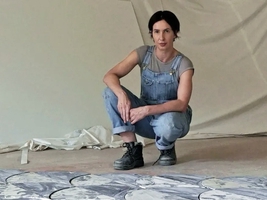 Zuzanna Czebatul